
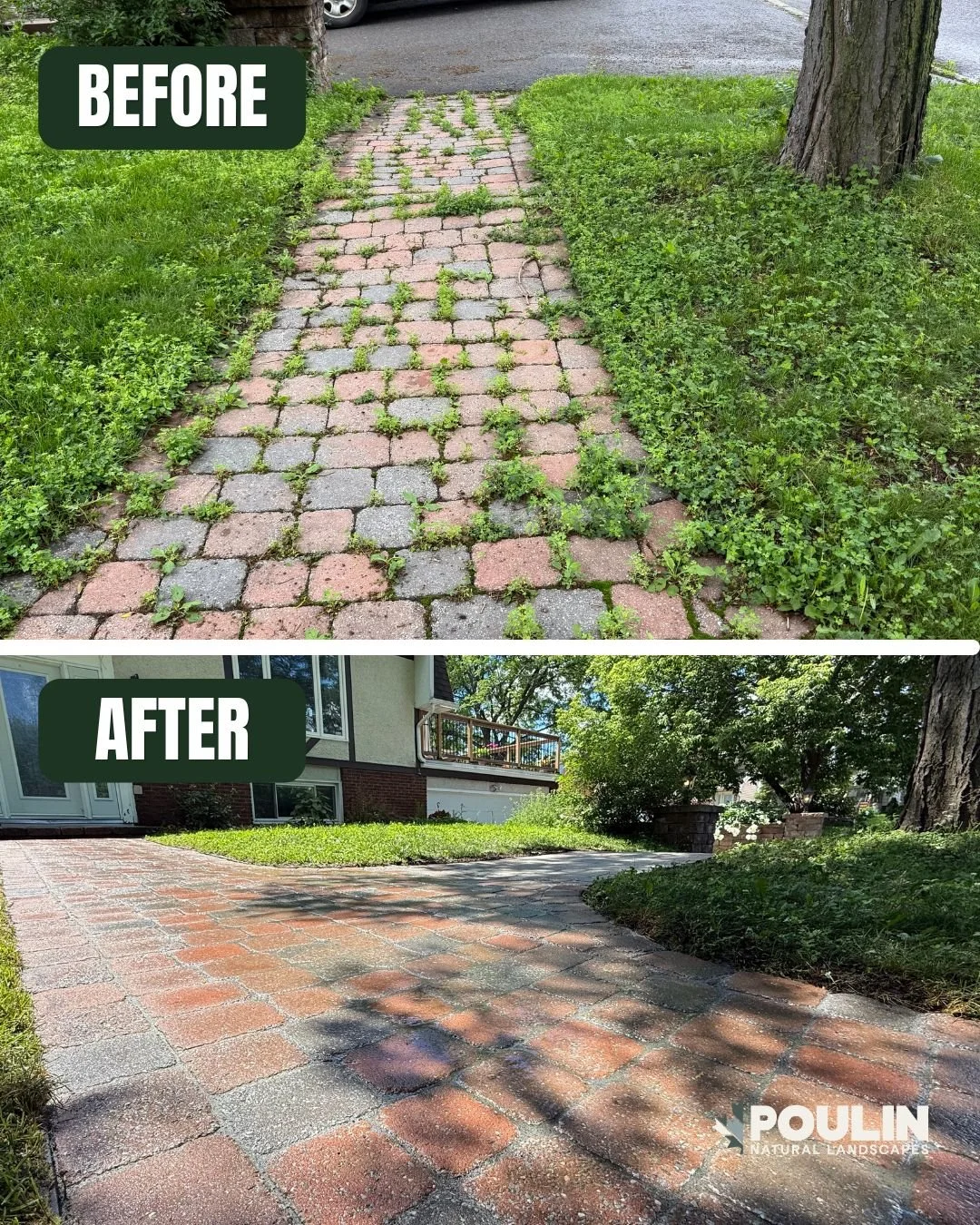
Interlock Repair in Ottawa West
Interlocking pavers are one of the most durable and versatile choices for patios, walkways, driveways, and front entrances. They offer a clean, timeless appearance while standing up well to Ottawa's changing seasons. Unlike poured concrete, individual pavers can be removed and reinstalled if repairs are ever needed, making them a practical long-term investment for your home.
Over time, however, even the highest-quality pavers can begin to settle or shift if the original base was not installed correctly or if years of weather, drainage issues, and regular use take their toll. You may notice uneven surfaces, tripping hazards, water pooling, or loose pavers.
The good news is that these problems can often be repaired without replacing your entire hardscape. At Poulin Natural Landscapes, we carefully lift the affected pavers, correct the underlying issue, rebuild and compact the base where needed, and reinstall your existing stones to restore both the appearance and function of your outdoor space.
What causes pavers to fail?
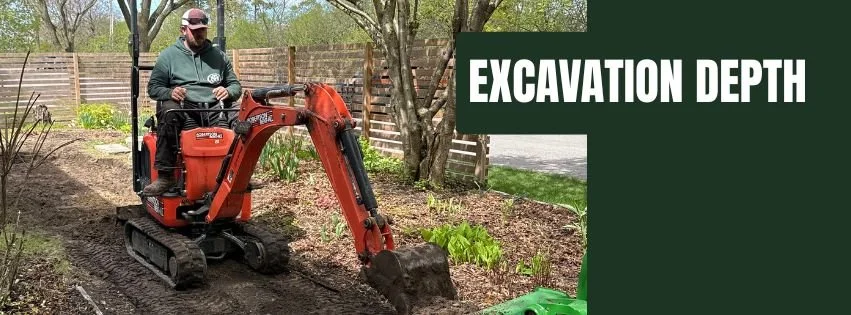
Poor Base Preparation
A long-lasting interlock project starts with what's underneath the pavers. Before any clear stone is installed, the area needs to be excavated deep enough to accommodate a properly compacted open-graded stone base, a 1-inch bedding layer, and the pavers themselves.
At Poulin Natural Landscapes, we typically excavate to a depth of approximately 10 inches, including a minimum 6-inch compacted open-graded stone base. This creates a stable foundation that promotes proper drainage and helps reduce settling, shifting, and frost movement over time.
Unfortunately, this step is often rushed or overlooked because deeper excavation requires more labour, more material removal, and higher installation costs.
Poor Choice of Base Material
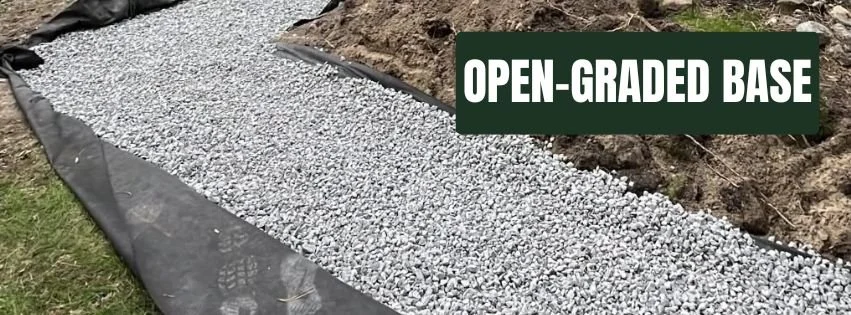
The base beneath your interlock should allow water to drain freely. When water becomes trapped under your pavers, it can lead to several problems, including shifting, frost heave, sinking, white staining (efflorescence), and the premature failure of the polymeric sand between the joints.
Years ago, stone dust was commonly used as a base material. While it may seem like a solid option, it tends to hold moisture rather than let it drain away. Over time, this trapped water can cause recurring issues that shorten the lifespan of your interlock.
At Poulin Natural Landscapes, we use free-draining base materials that allow water to move away from your hardscape. Combined with proper installation and compaction, this helps create a stronger, longer-lasting foundation that is better suited to Ottawa's freeze-thaw climate.
Geotextile Fabric
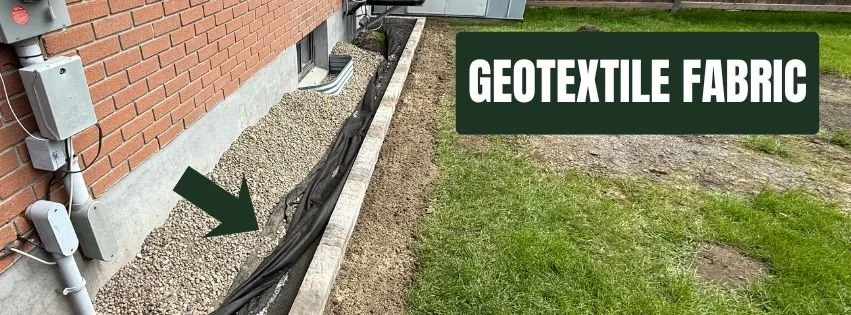
Geotextile fabric is installed between the soil and the stone base to help keep the two separate. This helps prevent the base from mixing with the underlying soil over time, allowing it to maintain its strength and stability.
Although it's a relatively inexpensive material, it's a step that's sometimes skipped to reduce installation costs.
At Poulin Natural Landscapes, we believe it's an important part of building a long-lasting foundation. When combined with proper excavation, free-draining base materials, and thorough compaction, geotextile fabric helps improve the overall durability and performance of your interlock.
Polymeric Sand Installation Failures
Polymeric sand plays an important role in the performance of your interlock. It helps lock the pavers together, reduces weed growth, discourages insects, and helps prevent the joints from washing out over time.
For polymeric sand to perform as intended, it must be installed under the right conditions and according to the manufacturer's specifications. If the installation is rushed or completed incorrectly, the sand can loosen, crack, allow weeds or moss to develop, or wash out prematurely.
Even with proper installation, polymeric sand is not maintenance-free. Exposure to weather, heavy traffic, drainage issues, and Ottawa's freeze-thaw cycles can all affect its lifespan. That's why periodic maintenance and re-sanding are a normal part of owning an interlock patio, walkway, or driveway.

No Edge Restraint
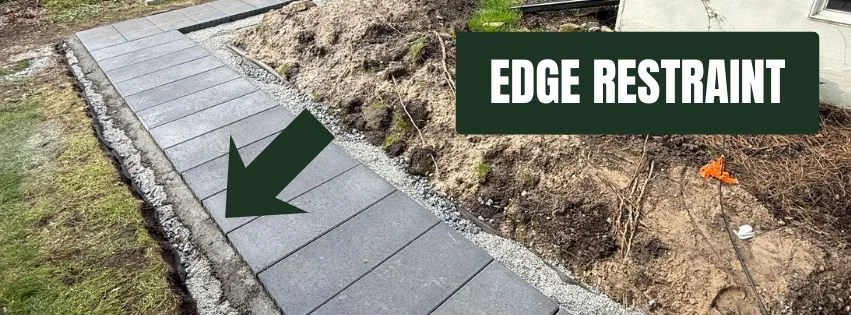
The outer row of pavers relies on a strong edge restraint system to keep the entire hardscape locked together. Without one, or if the existing edge restraint has failed, the outside pavers can gradually spread apart, shift, and allow the rest of the surface to lose its alignment over time.
During our assessments, it's not uncommon to find patios and walkways with little to no effective edge restraint. When appropriate, we recommend installing a discreet concrete edge restraint system, such as Gator Xtreme Edge, to help secure the perimeter of your interlock. Once installed and buried, it remains hidden from view while providing long-term support to the outside pavers and helping the entire installation maintain its shape and integrity.
Every interlock project is different, which is why we don't believe in a one-size-fits-all solution. During our on-site assessment, we'll determine what's causing the problem and recommend the repair option that makes the most sense for your home, your budget, and your long-term goals.
The most common issues we see are sinking, shifting, or separating pavers on patios, walkways, driveways, and front entrances. Depending on the condition of the existing installation, there are typically three approaches we can take: lifting and re-laying the existing pavers, rebuilding the affected base so we can provide our workmanship warranty, or replacing the entire hardscape when repair is no longer the most practical long-term solution.
Below, you'll find an overview of each option, along with the advantages and considerations of each, so you can make an informed decision with confidence.
Our Repair Process
REPAIR OPTION #1 : Lift & Re-Lay
This option focuses on restoring the affected area while keeping the existing foundation in place. The process includes carefully removing the pavers, cleaning them, removing the existing bedding layer, installing a new 1-inch bedding layer, re-laying and leveling the pavers, and finishing the repair with fresh polymeric sand.
Because the original base remains untouched, we cannot verify how it was built or predict how it will perform over time. For that reason, this repair option does not include our workmanship warranty. However, it is often the most cost-effective solution when the existing base is still in good condition or when a homeowner is looking for a lower-cost repair.
REPAIR OPTION #2 : Base Reconstruction
This option includes everything in the Lift & Re-Lay repair, with the added step of rebuilding the foundation beneath the affected area. We excavate and remove the existing base material (and additional material if required to achieve the proper depth), install geotextile fabric, and build a new free-draining stone base that is compacted in lifts before the pavers are reinstalled.
Because we have complete control over the foundation, this option qualifies for our 3-year limited workmanship warranty. While it is a larger investment than a standard Lift & Re-Lay, rebuilding the base addresses the root cause of the settlement and provides a stronger, longer-lasting repair designed to withstand Ottawa's freeze-thaw conditions.
REPAIR OPTION #3 : New Installation
In some cases, repairing an existing hardscape simply isn't the best long-term solution. When the pavers are badly worn, the layout no longer meets your needs, or the foundation has failed throughout the project, a complete replacement may be the most practical option.
This approach involves removing and disposing of all existing materials before constructing a brand-new patio, walkway, driveway, or front entrance using our proven installation methods. From proper excavation and base preparation to final compaction and polymeric sand installation, every step is completed with long-term performance in mind.